Most people cautioned me about the costs of quitting; only the wisest warned me of the costs of not quitting.
Everything you quit clears space to try something new. Everything you say “no” to is an opportunity to say “yes” to something else.
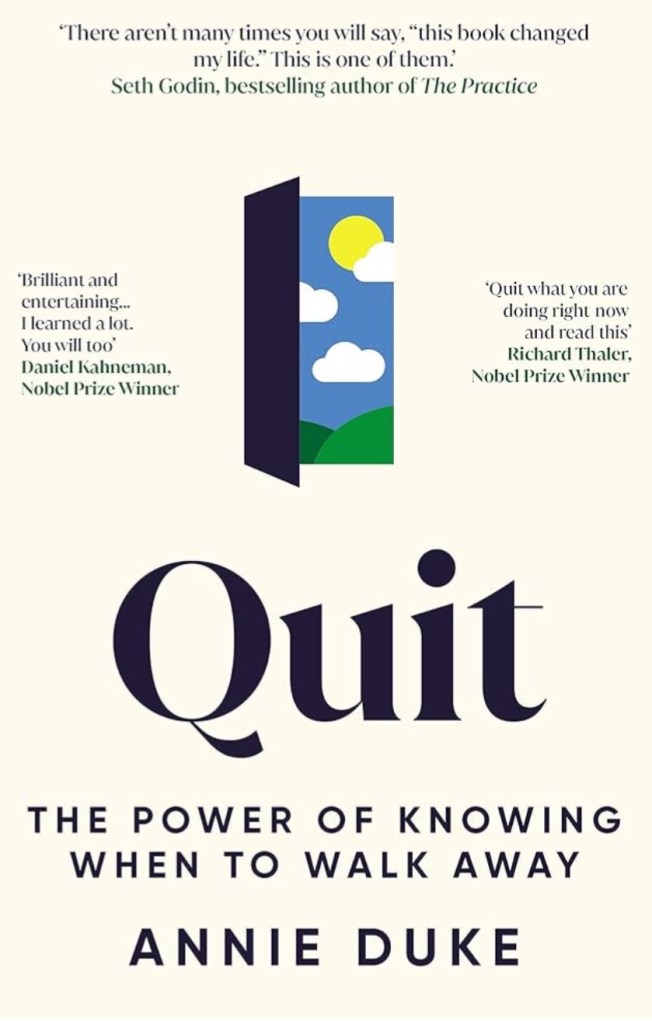
In her new book Quit, Annie Duke argues that when we’re weighing up whether or not to quit, our cognitive biases are putting their thumb on the scale in favour of persistence. And persistence is overrated.
What are these cognitive biases that push us towards persisting when we should quit?
One is the “sunk cost effect”, where we treat past costs as a reason to continue with a course of action.
The sunk cost fallacy is old news to economists, but it took Nobel laureate Richard Thaler to point out that if it was common enough to have a name, it was common enough to be regarded as human nature.)
The “status quo bias” also pushes us towards persevering when we should stop. The status quo bias is a tendency to reaffirm earlier decisions and cling to the existing path we’re on, rather than make an active choice to do something different.
A few years ago, Steve Levitt, coauthor of Freakonomics, set up a website in which people facing difficult decisions could record their dilemma, toss a coin to help them choose and later return to say what they did and how they felt about it. These decisions were often weighty, such as leaving a job or ending a relationship. Levitt concluded that people who decided to make a major change — that is, the quitters — were significantly happier six months later than those who decided against the change — that is, the fighters. The conclusion: if you’re at the point when you’re tossing a coin to help you decide whether to quit, you should have quit some time ago.
Tim Harford
 Majicman Notes
Leave a comment