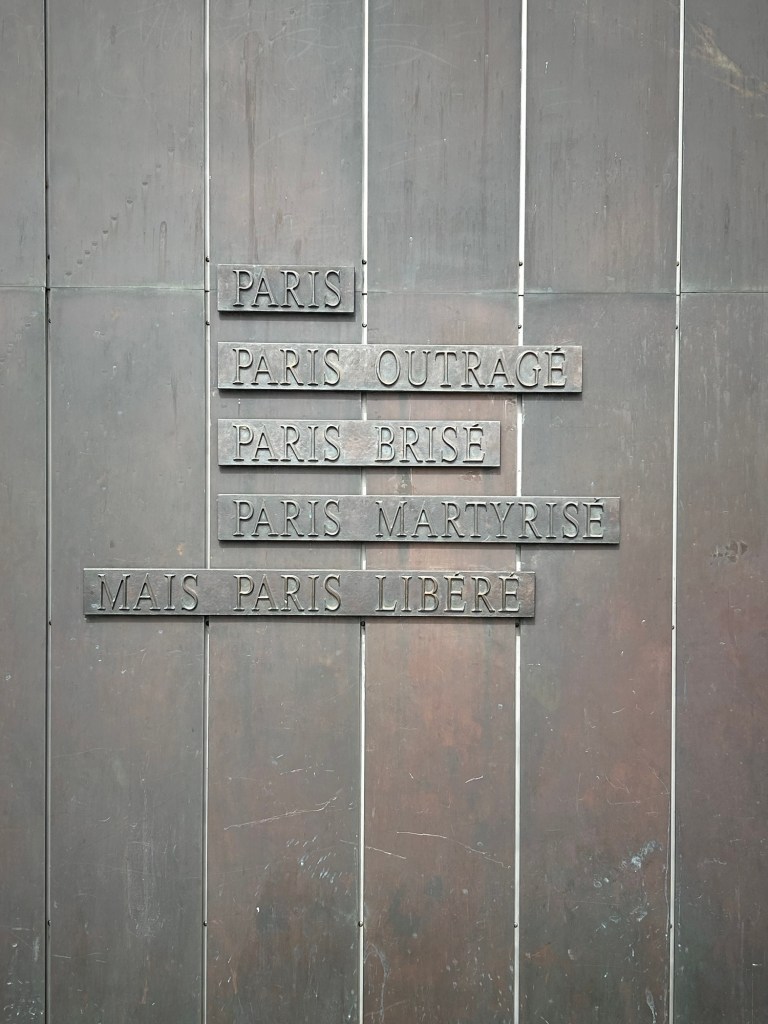
That Paris of the occupation was a strange place. On the surface, life went on ‘as before’ – the theatres, cinemas, music halls and restaurants were open for business. There were songs playing on the radio. Theatre and cinema attendances were in fact much higher than before the war, as if these places were shelters where people gathered and huddled next to each other for reassurance. But there are bizarre details indicating that Paris was not at all the same as before. The lack of cars made it a silent city – a silence that revealed the rustling of trees, the clip-clopping of horses’ hooves, the noise of the crowd’s footsteps and the hum of voices. In the silence of the streets and of the black-out imposed at around five o’clock in winter, during which the slightest light from windows was forbidden, this city seemed to be absent from itself – the city ‘without eyes’ as the Nazi occupiers used to say. Adults and children could disappear without trace from one moment to the next, and even among friends, nothing was ever really spelled out and conversations were never frank because of the feeling of menace in the air.
Patrick Modiano (Nobel prize, Literature 2014)
France
 Majicman Notes
Leave a comment